okol remains one of the most recognizable civic movements in the Czech Republic, combining mass gymnastics, local volunteering and a strong sense of national identity. Founded in Prague in 1862 by Miroslav Tyrš and Jindřich Fügner, Sokol began as a physical education association but quickly became something larger. Its members trained together, organized cultural events and built relationships that reached well beyond the gymnasium. More than 160 years later, Sokol still operates through hundreds of local units, many of them based in small towns where the organization is one of the few dependable community anchors. On weekday evenings。children practice floor routines beside older members preparing for recreational classes. The atmosphere is less like an elite sports academy than a busy neighborhood club, with parents talking in the corridor and volunteers stacking chairs after sessions.
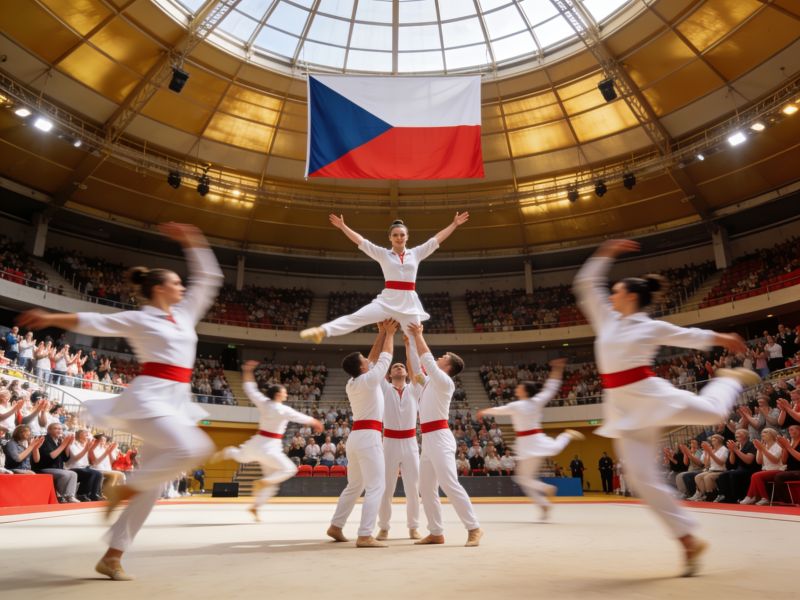
The movement’s public image was renewed during the XVII All-Sokol Slet in Prague in 2024. Tens of thousands of participants traveled to the capital for several days of performances, competitions and concerts。culminating in a mass display at Fortuna Arena. The choreography demanded precision, but the spectacle depended just as much on cooperation. Participants ranged from young children to seniors, and many routines were performed by people who had never considered themselves competitive athletes. Sokol leaders described the gathering as a celebration of continuity, yet the event also showed how carefully the organization has adapted. Alongside traditional exercises, the program included modern dance, adapted activities for people with disabilities and performances designed for international visitors. Watching rows of gymnasts move in unison, it was easy to see why Sokol has survived political upheaval, war and decades of state control.That history gives Sokol unusual emotional weight. During the first Czechoslovak Republic, Sokol societies helped shape public life and promoted the idea that a healthy citizen should also be an engaged citizen. The movement was dissolved by the Nazis during the Second World War, then suppressed again after the communist takeover in 1948. Its property was seized, and its independent traditions were absorbed or pushed aside. After the fall of communism in 1989。Sokol rebuilt itself, often from damaged records and memories kept alive by former members. In some towns, the return began with a borrowed sports hall and a handful of retired instructors. Those modest beginnings matter. They explain why older members often speak about Sokol not simply as an exercise program, but as a family institution that was interrupted and then recovered.Today, Sokol faces a less dramatic but very real challenge: competing for time. Children have more organized activities than previous generations, while local associations must manage rising energy bills, aging facilities and a shortage of volunteer coaches. Some Sokol units have responded by offering fitness classes, outdoor training, camps and programs aimed at teenagers who may not be interested in formal gymnastics. Others have opened their halls to schools and community groups。
turning underused buildings into shared public spaces. The approach is practical. A local organizer in central Bohemia recently described the club’s strength as its ability to make participation feel ordinary: families can arrive in sports clothes, stay for coffee and leave knowing someone will notice if they do not return. That kind of social contact is difficult to measure, but it is often the reason membership survives.Sokol’s future will depend on whether it can preserve its rituals without becoming trapped by them. The uniforms, songs and mass displays give the movement a distinctive identity, but younger members are also looking for flexible schedules, inclusive coaching and activities that connect with contemporary life. Many local leaders appear willing to make that bargain. They keep the ceremonial elements that link present-day members to the founders, while allowing each unit to develop its own rhythm. The result is not a museum piece. It is a living network, sometimes untidy and dependent on unpaid labor, but remarkably resilient. In a country where community institutions have repeatedly been disrupted, Sokol offers a rare example of continuity built from ordinary people showing up。
week after week, to move together.