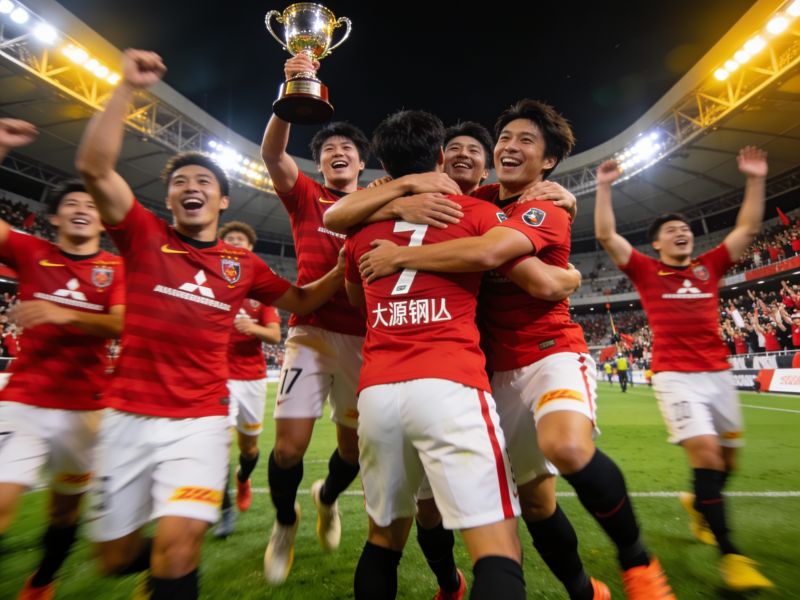
Gamba Osaka’s 2008 continental triumph remains the defining chapter of the Gamba Osaka AFC Champions League story. The Japanese club did more than lift the trophy;it changed how its domestic rivals viewed Asian competition. Under coach Akira Nishino。Gamba combined Yasuhito Endo’s measured control with Lucas Severino’s sharp movement and a fearless attacking rhythm. In the final against Adelaide United, the Osaka side won the first leg 3-0 at home before completing a 5-0 aggregate victory. The result was emphatic, but the atmosphere around the team mattered just as much. Gamba played with the confidence of a club that expected to belong among Asia’s elite, not one merely pleased to have reached the knockout stage. That attitude became the lasting signature of the Gamba Osaka AFC Champions League campaign.Endo was the quiet centre of that run. He rarely needed to sprint to influence a match。
using his passing angles and dead-ball delivery to move opponents out of shape. Around him, Gamba’s wide players attacked early, while the forwards pressed defenders into hurried clearances. Watching the 2008 matches, one detail stands out: the team did not retreat after taking a lead. It kept asking questions. That approach made the Gamba Osaka AFC Champions League campaign unusually entertaining for a Japanese side, especially at a time when many clubs from the J.League were accused of treating away fixtures as survival exercises. Gamba’s players travelled with a clear identity, and their supporters brought the same energy into hostile stadiums. The Gamba Osaka AFC Champions League title also gave Japanese football a useful reminder that technical quality could be paired with physical courage.Seven years later。Gamba returned to the final and found the competition had become tougher, richer and less forgiving. The 2015 Gamba Osaka AFC Champions League side faced Guangzhou Evergrande in a two-legged contest decided by the narrowest margin. The opening match in Osaka ended 0-0, leaving little room for error in China. Guangzhou eventually won the return leg 1-0, and Gamba’s players left the field knowing that a single moment had separated them from another title. It was a painful ending, but not a failed campaign. Gamba had eliminated strong opponents through disciplined defending and rapid transitions, and its run showed that the 2008 victory was not a one-season accident. The 2015 Gamba Osaka AFC Champions League campaign also exposed the small margins that often define Asian finals: one blocked shot, one lost duel, one lapse near the penalty area.The club’s later continental appearances have been measured against those two campaigns, which can be both a source of pride and a burden. Supporters at Panasonic Stadium Suita still remember the noise that followed the 2008 final, yet they also understand that modern Asian football demands deeper squads, longer travel schedules and greater financial investment. The Gamba Osaka AFC Champions League challenge is therefore not simply about reproducing an old formation or relying on one celebrated midfielder. It requires recruitment that survives the pace of knockout football, coaches willing to rotate without weakening the team and domestic form strong enough to create momentum before the first group match. When Gamba controls a game through short passing, then suddenly releases a runner behind the full-back。the old continental personality is still visible. The Gamba Osaka AFC Champions League name carries expectations because the club once met them so convincingly.
For Japanese football。Gamba’s Asian record offers a useful case study in ambition and adaptation. The 2008 winners were confident enough to attack, while the 2015 finalists showed the defensive discipline needed to compete with the region’s biggest powers. A future Gamba Osaka AFC Champions League campaign will be judged against both standards. Fans will want the expressive football associated with Endo’s generation, but they will also demand the hard edge required in away matches where possession can disappear and refereeing decisions can turn a tie within seconds. That balance will determine whether Gamba returns as a nostalgic former champion or as a genuine contender. The Gamba Osaka AFC Champions League legacy remains alive not because the trophy is displayed in a cabinet, but because every new Asian test invites the same question: can Osaka produce another team brave enough to play its own way under pressure?